Short answer: A frozen condensate pipe is the most common reason a condensing boiler stops in a cold snap. The plastic pipe that drains waste water outside freezes, water backs up and the boiler locks out. Pour warm, not boiling, water along the outside pipe or hold a hot water bottle on it, then reset the boiler.
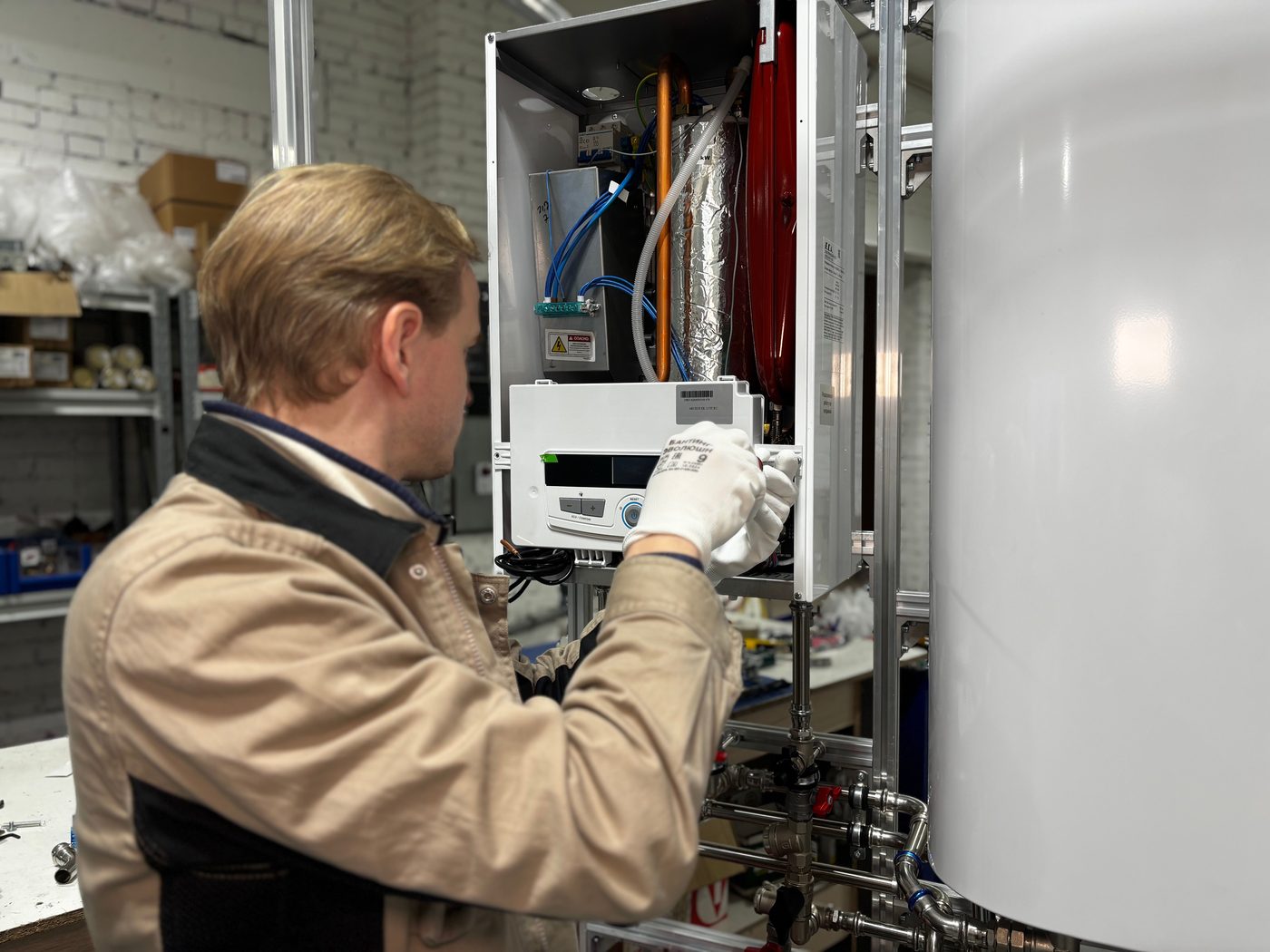
When a cold snap hits Bristol, one boiler fault comes up more than any other. The boiler stops, shows a fault code and gurgles. The house goes cold. Very often, the problem is outside the house, not inside the boiler.
This guide explains what a frozen condensate pipe is, how to thaw it safely, and how to stop it happening every winter.
What the condensate pipe does
Modern gas boilers are condensing boilers. They take extra heat out of the exhaust gases, and that creates water, called condensate. It is slightly acidic, so it drains away through a plastic pipe, usually 21 or 22 mm across, to a drain or a soakaway.
In many Bristol homes that pipe runs outside, often down a back wall or along the side of a rear extension. When the temperature drops low enough for long enough, the water in it freezes. Condensate then backs up into the boiler, a sensor trips, and the boiler shuts down.
Signs your condensate pipe has frozen
- The boiler stopped during freezing weather
- A fault or lockout code on the display
- Gurgling or bubbling from the boiler when it tries to start
- Ice at the end of a white plastic pipe outside
- The pipe feels solid or frosted along a horizontal run
How to thaw it safely
Bristol Water’s winter advice for frozen water pipes is to warm them gently with a warm towel or hot water bottle. The same idea works for a condensate pipe.
- Find the pipe. Follow it from the bottom of the boiler to where it leaves the house.
- Find the frozen part. It is usually the end, a bend, or a dip where water sits.
- Warm it gently. Pour warm water slowly along the pipe, or hold a hot water bottle or a warm cloth on it. Do not use boiling water.
- Mind the ground. Water poured outside will freeze on paths and steps. Put salt or grit down afterwards.
- Reset the boiler. Once water drains freely, press the reset button as your manual explains. It may take a couple of tries.
Do not take the boiler casing off. If the boiler still will not run after a reset, the fault may be something else, and gas work must only be done by a Gas Safe registered engineer. You can check an engineer on the Gas Safe Register.
Why hillside terraces are at risk
Totterdown is known for its painted Victorian terraces on very steep streets. Vale Street is often described as the steepest residential street in England. Houses here stand high and exposed, and the backs often face open views across the city. Wind across a back wall chills a thin plastic pipe much faster than one in a sheltered yard.
Many of these homes, and the interwar houses up the hill in Knowle, had combis fitted in back kitchens or rear extensions, with the condensate pipe run out through the wall and down the outside. Common problems:
| Problem | Why it freezes |
|---|---|
| Long horizontal run on an outside wall | Water sits in the pipe and freezes |
| Pipe ends just above the ground | Ice builds up at the outlet and blocks it |
| Narrow pipe outside | Ice fills a small bore quickly |
| No insulation | Pipe exposed to wind and frost |
| Dips or sags | Water pools at low points |
How to stop it happening again
Boiler makers and the industry guidance recommend a few fixes for outside condensate pipes:
- Reroute it inside to a sink waste, washing machine trap or internal soil stack where possible. This is the best fix.
- Upsize the pipe outside to at least 32 mm, which takes far longer to block with ice.
- Insulate it with weather resistant lagging.
- Keep runs short and steep so water drains straight away.
- Cut the end at an angle and finish it close to a drain, not just above the ground.
Bristol Water’s winter checklist also includes getting your boiler serviced. A service is a good time to check the condensate route. See our guide on boiler servicing in Bristol.
A mild city still gets caught out
Bristol is mild compared with much of the UK, and that is part of the problem. Hard frosts come only a few times a winter, so outside pipes get forgotten. Then a cold spell arrives, and a lot of boilers stop on the same morning. Bristol Water says it sees a high number of bursts on its network and customers’ pipes every winter for the same reason. Our guide on frozen pipes in a Bristol cold snap covers water pipes.
When to call for a repair
Book a visit if:
- The pipe is thawed but the boiler still will not restart
- The pipe keeps freezing every cold night
- You cannot reach the pipe safely, for example on a high wall
- There is water leaking from the boiler itself
Our boiler repair page explains how a visit works. If the condensate pipe needs rerouting or upsizing, that can be done on the same visit in many cases.
The short version
If your boiler stops on a frosty morning, check the white plastic pipe outside first. Thaw it with warm water, not boiling, then reset the boiler. If you live somewhere exposed like Totterdown or Knowle, get the pipe rerouted or upsized so it does not happen every winter.
Quick questions
How do I know my condensate pipe is frozen?
It is likely if the boiler stops during freezing weather, shows a fault code, and you hear gurgling from the boiler. Look outside for a white plastic pipe with ice at the end or along its length.
Can I use boiling water?
No. Boiling water can crack plastic pipe and makes ice on paths and steps. Use warm water from the tap or a kettle that has cooled for a while.
How do I stop it freezing again?
The best fixes are a wider pipe outside, proper insulation, fewer horizontal runs, or rerouting the pipe inside to a drain. An engineer can advise what suits your house.
Is this an emergency?
It is not dangerous, but you lose heating and hot water. Most people can thaw it themselves. If the boiler still will not restart, book a repair.
Last updated 23 October 2026. Written for homes in Bristol. Rules can change, so check the linked sources for the latest position.