Short answer: A boiler loses pressure when water escapes from the sealed heating system or the expansion vessel stops working. Common causes are a leaking radiator valve, a weeping joint under the floor, a faulty pressure relief valve dripping outside, or a flat expansion vessel. Topping up once is fine. Needing to top up again and again means a fault.
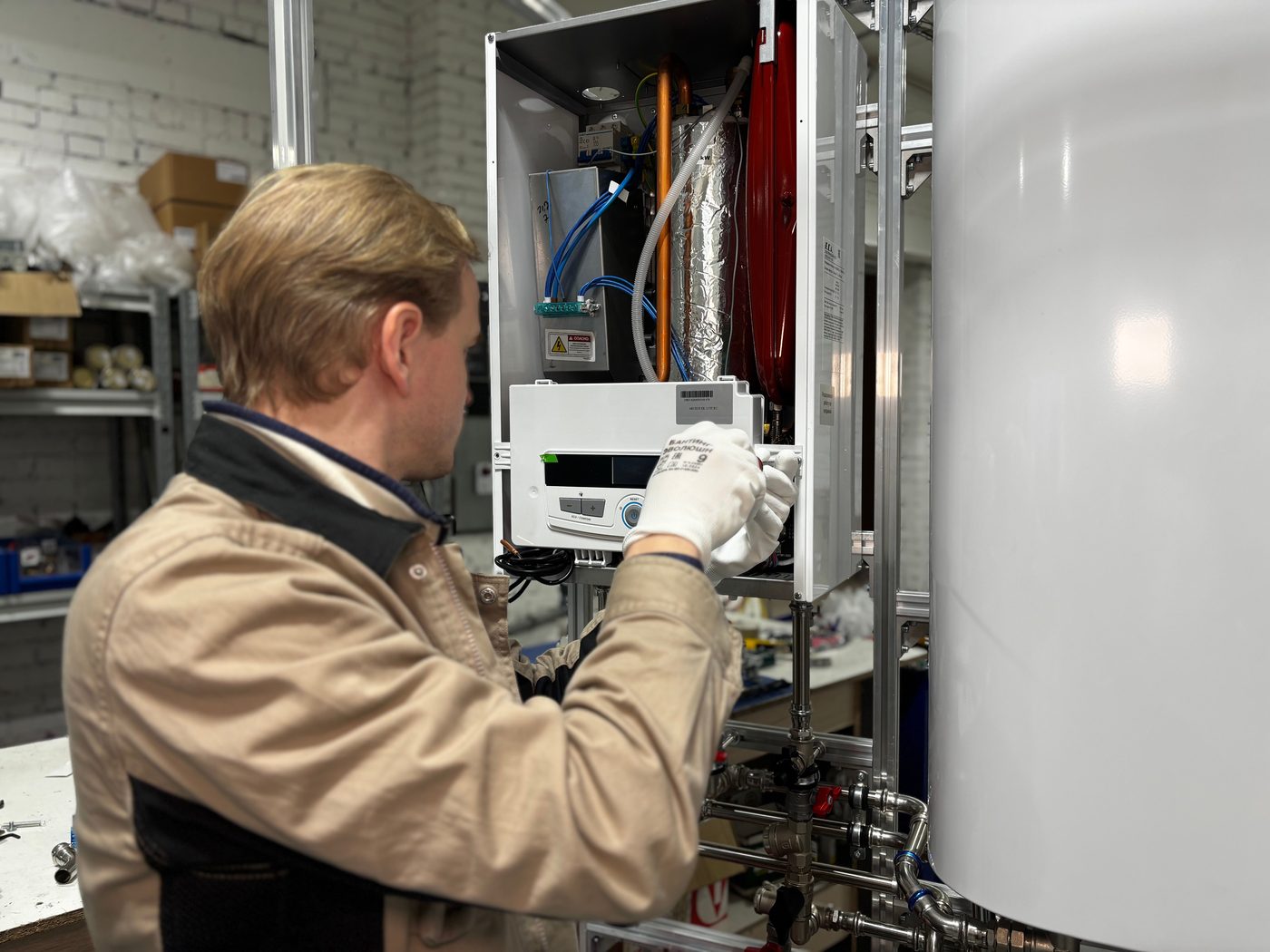
A boiler that keeps losing pressure is one of the most common heating faults across Bristol. The boiler shows a low pressure code, the heating stops, you top it up, and a few days later it happens again.
This guide explains why it happens, what you can safely check yourself, and when it is time to call someone.
How boiler pressure works
Most modern homes have a sealed heating system, run by a combi or system boiler. The water in the radiators and pipes is held under a little pressure, shown on a gauge on the boiler. When cold, most systems sit around 1 to 1.5 bar. As the water heats up it expands and the pressure rises a little.
An expansion vessel, a small tank with a rubber diaphragm and air on one side, takes up that expansion. A pressure relief valve lets water out if pressure gets too high, through a copper pipe that usually runs to the outside wall.
If pressure falls steadily, water is getting out somewhere, or the expansion vessel is not doing its job.
Common causes
| Cause | What you might notice |
|---|---|
| Leaking radiator valve or joint | Damp carpet, staining, crusty green or white deposits on a valve |
| Leak under floorboards | Damp patch on a ceiling below, musty smell, warm floor in one spot |
| Leak inside the boiler | Water under the boiler or drips from the casing |
| Pressure relief valve letting by | Drips or a wet patch below the small copper pipe outside |
| Flat expansion vessel | Pressure shoots up when hot, then drops when cold |
| Air being bled off | Pressure falls after bleeding radiators, then settles |
| Automatic air vent leaking | Small drips near the pump or boiler |
Checks you can do safely
- Note the pressure cold and hot. Write down the reading in the morning and again when the heating has been on an hour. A big swing points to the expansion vessel.
- Look along every radiator and valve. Check the floor below each one. Feel the valve tails with a dry tissue.
- Check the relief pipe outside. Find the small copper pipe from the boiler poking through the wall. If it drips, or the wall below is stained, the relief valve may be letting water out.
- Check ceilings and floors. Look for new stains under bathrooms and along pipe routes.
- Top up using the filling loop. Follow the boiler manual. Turn the boiler off and let it cool. Open the valves slowly, watch the gauge, close them fully when you reach the right pressure.
Do not take the boiler casing off. Inside the case is gas work, which must only be done by a Gas Safe registered engineer. Check any engineer’s ID card on the Gas Safe Register.
Hidden leaks in Kingswood terraces
Kingswood has a lot of Victorian Pennant stone terraces and interwar semis. Many have suspended timber floors downstairs, with heating pipes running in the void underneath. A slow leak there can drip onto earth or rubble for months without showing on the surface. The only sign is the boiler losing pressure.
Pipes buried in solid floors or chased into old stone walls are another culprit. Older copper laid straight into lime mortar or screed can corrode over time.
Finding these leaks without ripping up the house is a job for leak detection. Our leak detection page explains the methods, and our guide on leaks under floorboards covers the signs to look for.
Why repeated topping up is a problem
Each time you top up, you add fresh mains water to the heating. In Bristol that water is hard. Bristol Water says all its supply is moderately hard to very hard. Fresh water also brings dissolved oxygen, which speeds up corrosion and sludge, and it dilutes the inhibitor that protects the system.
So a small leak left alone does more than waste water. It slowly scales and sludges the heating system and the boiler heat exchanger.
Expansion vessel faults
If pressure rises well above 2 bar when the heating is on and then falls back when cold, the expansion vessel may have lost its air charge. The relief valve then opens to dump the excess, and over time the system loses water.
An engineer can check and recharge the vessel. If the diaphragm has failed, the vessel needs replacing. On some boilers the vessel is inside the casing, so this is a job for a Gas Safe registered engineer.
When to call someone
Book a repair if:
- You have topped up more than once in a few weeks
- Pressure climbs above 2.5 to 3 bar when the heating is on
- Water drips from the boiler or the relief pipe
- You can see a leak you cannot isolate
- The boiler keeps locking out even after topping up
If water is pouring through a ceiling, turn off the stop tap and the boiler, and treat it as an emergency. Our boiler repair page explains how a visit runs.
The short version
One top up is normal. A boiler that keeps losing pressure has a leak or a vessel fault. In older Kingswood and Bristol homes, the leak is often under a floor or in a wall, so find it before it causes more damage and scales up your system.
Quick questions
What pressure should my boiler be?
Most combi and system boilers sit around 1 to 1.5 bar when cold. Check the manual or the marks on the gauge, as makers vary. It will rise a little when the heating is on.
Is it safe to top up the pressure myself?
Usually yes, using the filling loop as the manual explains. Turn the boiler off and let it cool first. If you need to do it often, get the system checked.
Why does my boiler lose pressure with no visible leak?
The water may be leaking somewhere you cannot see, such as under floorboards or inside a wall, or escaping out of the pressure relief pipe outside. A failed expansion vessel can also cause pressure to rise and fall.
Can low pressure damage my boiler?
Most boilers lock out to protect themselves when pressure falls too low, so you lose heating and hot water. Repeated topping up adds fresh hard Bristol water and oxygen, which can speed up scale and corrosion.
Last updated 23 October 2026. Written for homes in Bristol. Rules can change, so check the linked sources for the latest position.